Why Does My Custom Home Cost More Than That House in Dwell?

A practical guide for homeowners in Portland, Seattle, and the Columbia River Gorge

By Janke Architecture | Portland, Oregon

Dwell publishes a Money Issue every so often. The houses are always beautiful. the projects are always worth studying, even if the budgets are always suspiciously low.

Here's how it works. The homeowner is an architect — so no design fee. They also acted as their own general contractor — so no contractor markup, no profit, no overhead. The framing crew was a team of architecture school friends who showed up for a long weekend and a case of beer. The custom cabinetry was built by a woodworker who owed someone a favor. The owner didn't pay themselves for the fourteen months they spent managing the project full time. And the land? Let's just say it came through family and leave it at that.

It's not dishonest. It's just not useful — unless you happen to be a licensed architect with a general contractor's license, a decade of trade relationships, and a very generous circle of friends who consider framing a fun weekend activity.

For everyone else, the number looks a little different. Here's what it actually looks like.

If you've started researching custom home costs in the Pacific Northwest, you've probably encountered a frustrating range of numbers — anywhere from $400to $700 per square foot, sometimes more. That range isn't evasive. It's honest. But it's also not very useful without context.

As architects who work across Portland, the Columbia River Gorge, and increasingly into Washington, we are asking our general contractors about what drives construction costs . This post is our attempt to give you the clearest, most direct answer we can — and to explain why the number that matters most is the one specific to your project, on your site, with your priorities.

The short answer

For a custom home in the Pacific Northwest in 2025–2026, here's a realistic range by market and quality tier:

Portland metro

Entry-level custom $400–$500/sf

Mid-range custom $550–$600/sf

High-end / bespoke $650–$900+/sf

Seattle metro

Entry-level custom $450–$550/sf

Mid-range custom $600–$700/sf

High-end / bespoke $750–$1000+/sf

Columbia River Gorge

Entry-level custom $400–$500/sf

Mid-range custom $500–$650/sf

High-end / bespoke $650–$900+/sf

These figures reflect total construction cost — labor and materials — and do not include land, design fees, permitting, site development, or financing. Those costs can add 25–40% on top of the construction number and are discussed below.

A few things these ranges mean in practice: a 2,000 sq ft mid-range custom home in Portland will typically run $900,000 to $1.2 million in construction cost alone before land and fees. In Seattle or the Gorge, add another 10–15% as a starting assumption.

Why costs vary so dramatically

The gap between $350 and $900 per square foot isn't arbitrary. It reflects real decisions — some made by you, some by your site, some by the market. Here are the biggest drivers:

Site conditions

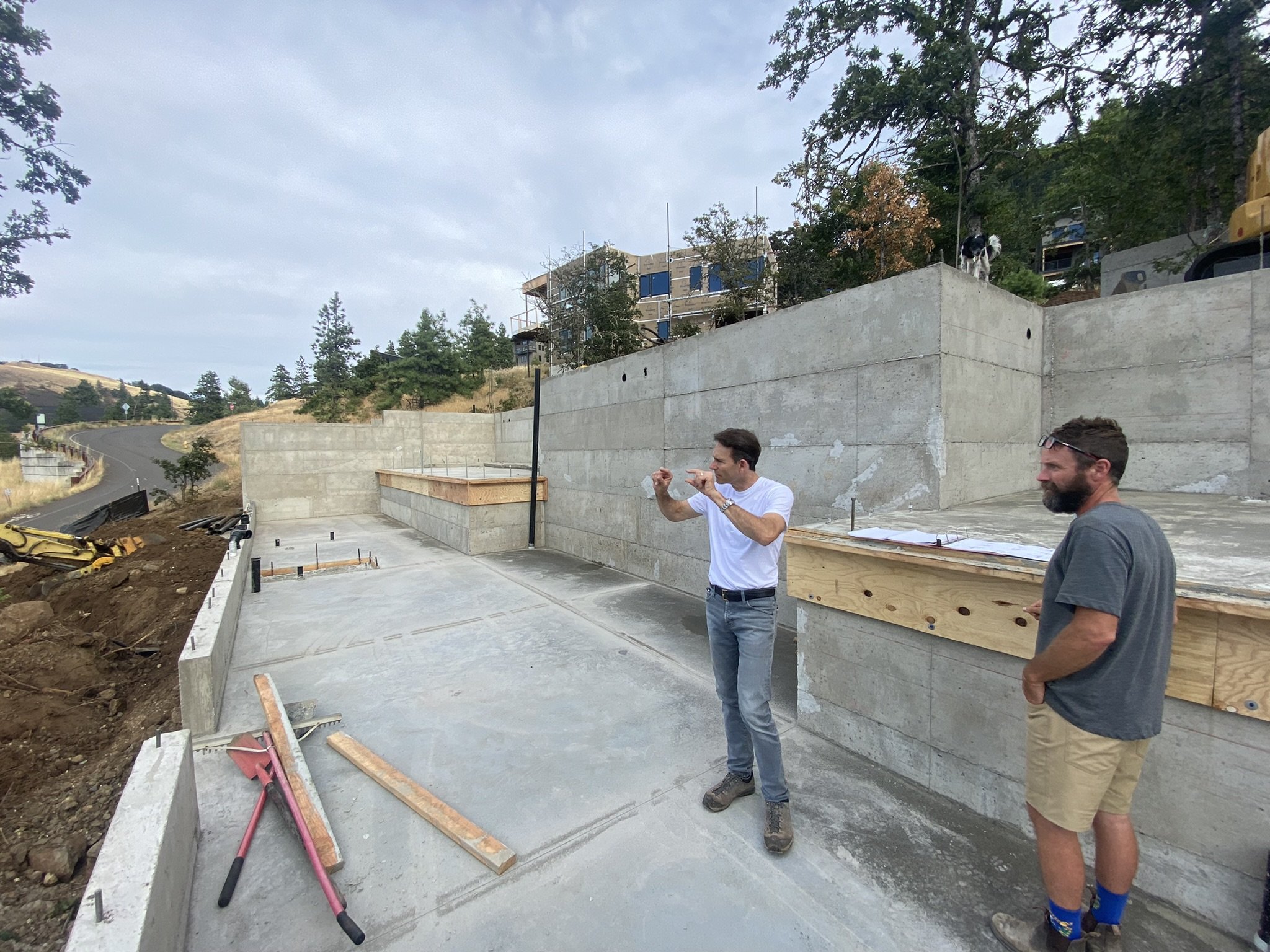
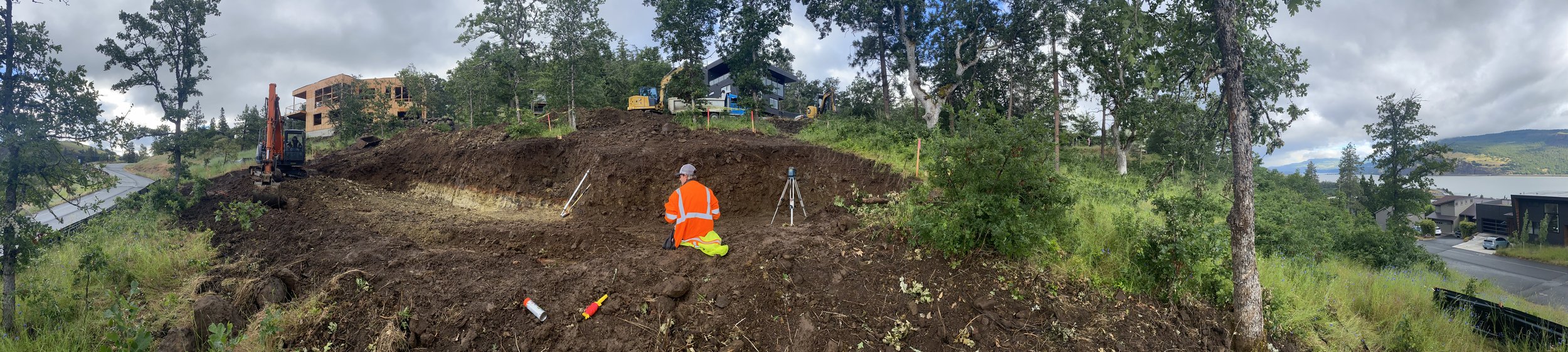
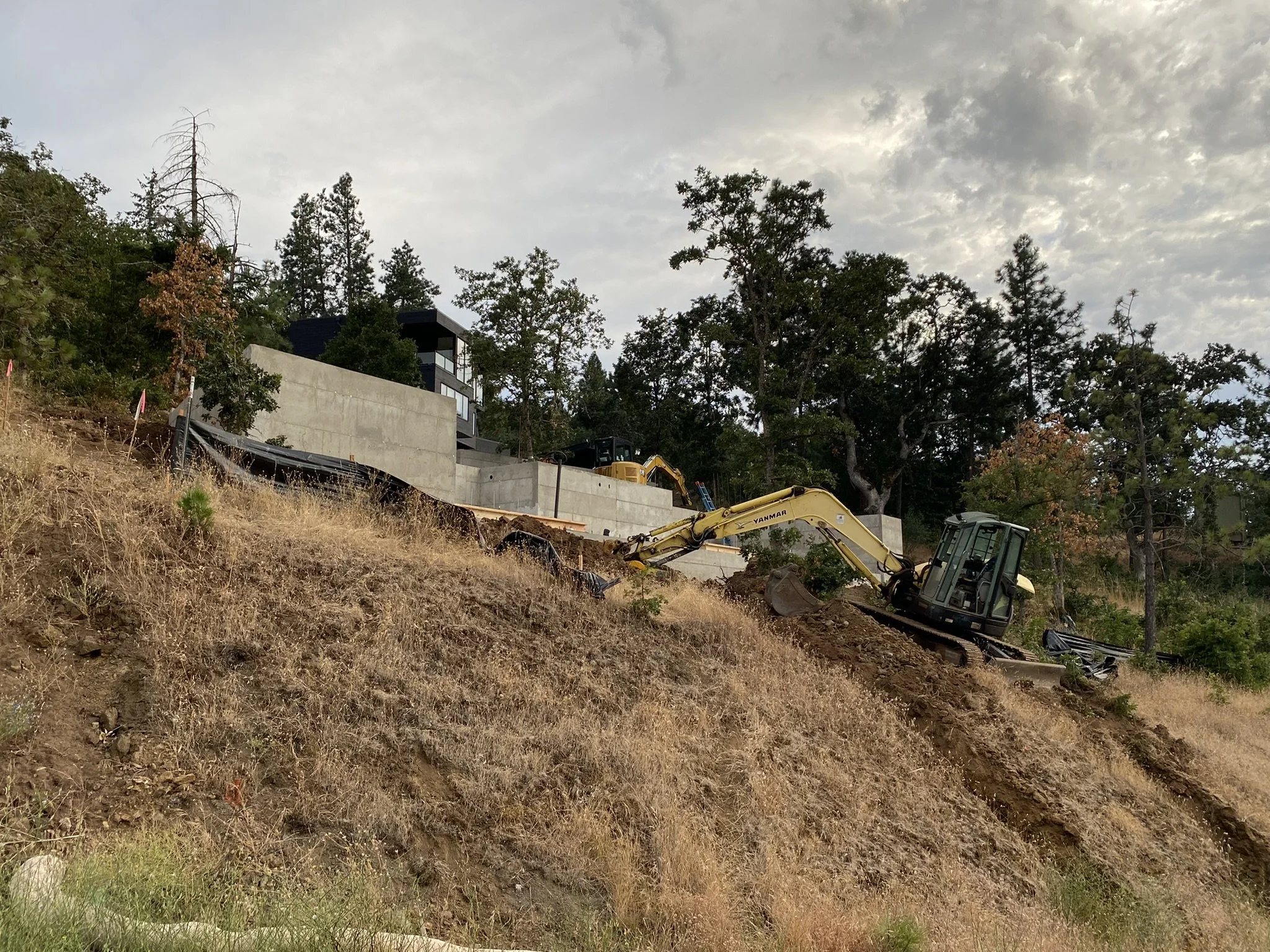
A flat lot with easy access and standard utilities is a fundamentally different project from a sloped hillside with limited truck access, a high water table, or expansive soils. In the Columbia River Gorge, sites often involve steep terrain, rock, wildfire setback requirements, and in many cases design review under the Columbia River Gorge National Scenic Area — all of which add cost before a wall goes up. In Portland, older lots may have buried oil tanks, septic systems, or other surprises. Site work costs are notoriously hard to estimate until you're actually in the ground.

Size and program

Counterintuitively, smaller homes often cost more per square foot than larger ones. The fixed costs of a kitchen, a mechanical room, and a bathroom don't change much whether the house is 1,200 or 2,400 square feet. A right-sized 1,400 sq ft home with quality finishes will carry a higher cost-per-foot than a 3,000 sq ft builder-grade house. Don't let a high per-square-foot number alarm you without understanding the context of the project.

Structural complexity

Single-story rectangular buildings are the most efficient to build. The moment you introduce a second story, a complex roofline, a cantilevered deck, or a hillside foundation, costs climb. Mass timber and CLT construction — something we work with frequently — can be cost-competitive with conventional framing when the design leverages the system well, but requires careful early coordination.

Finishes and specifications

The difference between a $450/sf and a $700/sf home is often visible in the details: custom cabinetry vs. semi-custom, stone countertops vs. solid surface, triple-glazed European windows vs. domestic double-pane, radiant floor heat vs. forced air. None of these choices is wrong — but they compound quickly. A kitchen alone can swing total project cost by $50,000 to $150,000 depending on specification level.

Labor markets

Seattle's construction labor costs run meaningfully higher than Portland's, driven by a tighter subcontractor market and higher prevailing wages. The Gorge sits somewhere in between, though its relative remoteness from major labor pools can affect both availability and cost, particularly for specialty trades.

Energy and performance standards

Building to Passive House certification, achieving net-zero energy, or incorporating features like solar, battery backup, or advanced mechanical ventilation adds upfront cost — typically 5–15% depending on the system — but improves durability, comfort, and reduces long-term operating costs and is increasingly relevant for insurance purposes in wildfire-prone areas. Oregon's energy code (OEESC) and Washington's (WSEC) are both on aggressive update cycles, and code-minimum is a moving target. For example building to Passive House standards is now a code compliant pathway in Washington.

The financial advantage for bespoke custom homes is that Passive House uses a performance‑based, engineered approach. This gives you far more control over where you invest in the building envelope. Instead of following a rigid, prescriptive state mandate that applies blanket requirements for air sealing, insulation levels, and window performance, Passive House lets you strategically allocate budget according to your priorities. You decide which envelope components deserve the highest performance—and which can be optimized—rather than being forced into one-size-fits-all upgrades.

Costs beyond construction

The construction number is only part of the picture. A complete budget for a custom home typically includes:

  • Land: Varies enormously. A Portland infill lot might run $200,000–$500,000. A Gorge view property with acreage can be $400,000–$1M+.

  • Architecture and design fees: Typically 8–15% of construction cost for a full-service architect on a custom home.

  • Engineering: Structural, civil, geotechnical — plan for $15,000–$40,000 depending on project complexity.

  • Permitting: Portland residential permits typically run $15,000–$30,000 for a custom home. Gorge projects with scenic area review add time and cost.

  • Site development: Driveway, utilities, clearing, grading — $30,000 to $150,000+ depending on site.

  • Landscaping: Often underbudgeted. $20,000 on the low end; $100,000+ for a thoughtfully designed exterior.

  • Financing: Construction loans carry higher rates than permanent mortgages and add meaningful cost over a 12–18 month build.

A reasonable rule of thumb: add 30–40% to your construction budget to arrive at a total all-in project cost.

What this means for your project

The most useful thing we can do as your architect isn't to give you a number — it's to help you understand the relationship between what you want, what your site demands, and what your budget can realistically deliver. That's exactly what our Pre-Design phase is structured to do.

Projects that go over budget almost always do so for one of three reasons: the scope was never clearly defined, the budget was set before site conditions were understood, or the design was developed too far before pricing was tested with a builder. We work hard to close all three of those gaps early.

What builders are saying

We're asking the people who actually price and build these projects to share what's driving costs right now — and what homeowners consistently underestimate.

Questions we're asking builders:

  1. What is your current all-in cost range per square foot for a custom home in your market — and how has that changed over the past two to three years?

  2. What single line item most consistently surprises homeowners when they first see a budget?

  3. How much does site complexity — slope, access, soils — typically add to a base construction cost, as a percentage?

  4. Where do you see the biggest gap between what clients expect to spend and what projects actually cost?

  5. At what point in the design process do you want to be brought in, and what happens to cost when you're brought in too late?

  6. How are current labor availability and subcontractor capacity affecting schedules and pricing in your market?

  7. What's the cost premium for building to Passive House or a high-performance energy standard — and do you think it's worth it?

  8. For projects in the Columbia River Gorge specifically: how do remote sites, scenic area review, and wildfire requirements affect your pricing?

  9. What does a client do that makes a project go smoothly — and what do they do that drives cost up without adding value?

  10. If a client comes to you with a $800,000 construction budget for a custom home, what do you tell them about what's realistic in today's market?

The bottom line

Building a custom home in the Pacific Northwest is a significant investment — and an extraordinary opportunity to create something tailored exactly to how you live, where you live. The cost ranges in this post are real, but the number that matters is the one that emerges from an honest conversation between you, your architect, and your builder.

Thinking about building a custom home in Portland, Seattle, or the Columbia River Gorge? We'd love to talk through your project. Reach out at collin@jankearchitecture.com or visit our contact page to start the conversation.
Are You Really Ready to Build a Custom Home? Five Questions to Ask Yourself First

By Janke Architecture | Portland, Oregon

Building a custom home is one of the most rewarding things a person can do. It's also one of the most demanding. Before you hire an architect, make an offer on a lot, or start saving inspiration images, there are five questions worth sitting with honestly.

Is your budget real?

Not the number you hope it will be — the number that reflects actual construction costs in your market, plus land, plus design fees, plus permitting, plus contingency. In Portland and the Pacific Northwest, a mid-range custom home runs $450–$600 per square foot in construction cost alone, before you've purchased the land or paid a single consultant. If your budget doesn't have room for the full picture, now is the time to recalibrate — not after you've fallen in love with a design.

Is your program stable?

A custom home is designed around how you live right now — and how you expect to live for the next twenty years. If your household composition, work situation, or lifestyle is likely to change significantly in the near term, it's worth asking whether this is the right moment to lock in a program. The best custom homes are deeply tailored. That tailoring works best when the life it's tailored to is reasonably settled.

Do you have the right land?

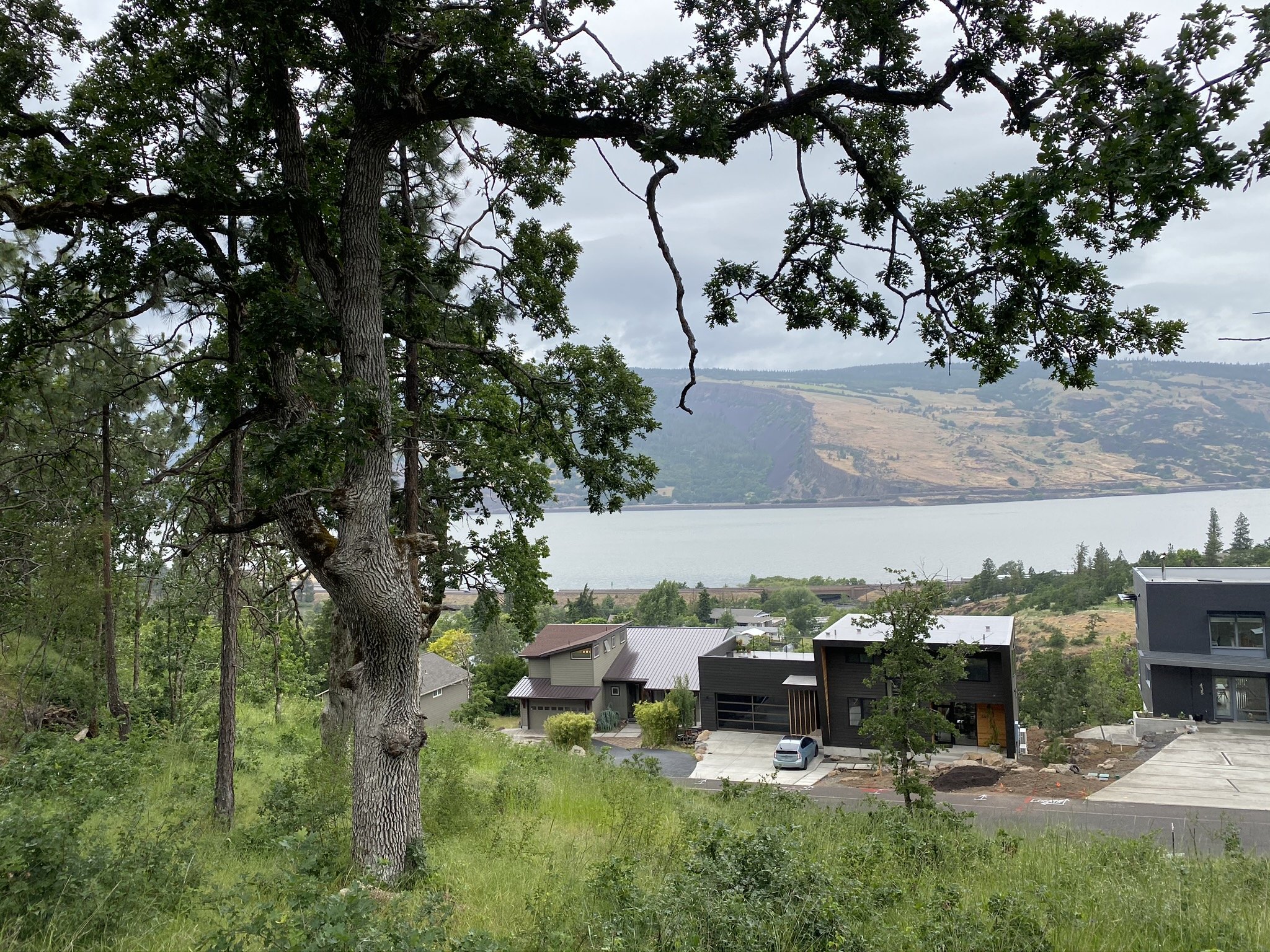
Not just land you love — land that is buildable at a cost that works within your budget. Slope, soils, access, utilities, zoning, and wildfire or flood overlay zones all affect what a site will cost to develop. A beautiful view lot that requires $200,000 in site work before construction begins is a fundamentally different project from a flat infill lot in Portland. Bring your architect into a land search before you close — not after.

Are your timeline expectations realistic?

A well-run custom home project — from initial design through certificate of occupancy — typically takes two to three years. Permitting alone in Portland can run six to twelve months. If you need to be in a home by a specific date, that date needs to be part of the conversation from day one.

Are you ready to be a client?

This one is less obvious but just as important. A custom home requires your active engagement throughout the process — attending design meetings, making timely decisions, reviewing documents, and trusting your team while also asking good questions. The clients who get the most out of the process are collaborative, curious, and comfortable with some degree of uncertainty. If that sounds like you, you're probably ready.

Thinking about building a custom home in Portland, the Columbia River Gorge, or the Pacific Northwest? We'd love to start the conversation. Reach out at collin@jankearchitecture.com.

Why be a Beaver believer?

What the West's Best Engineer Can Teach Us About Wildfire Resilience

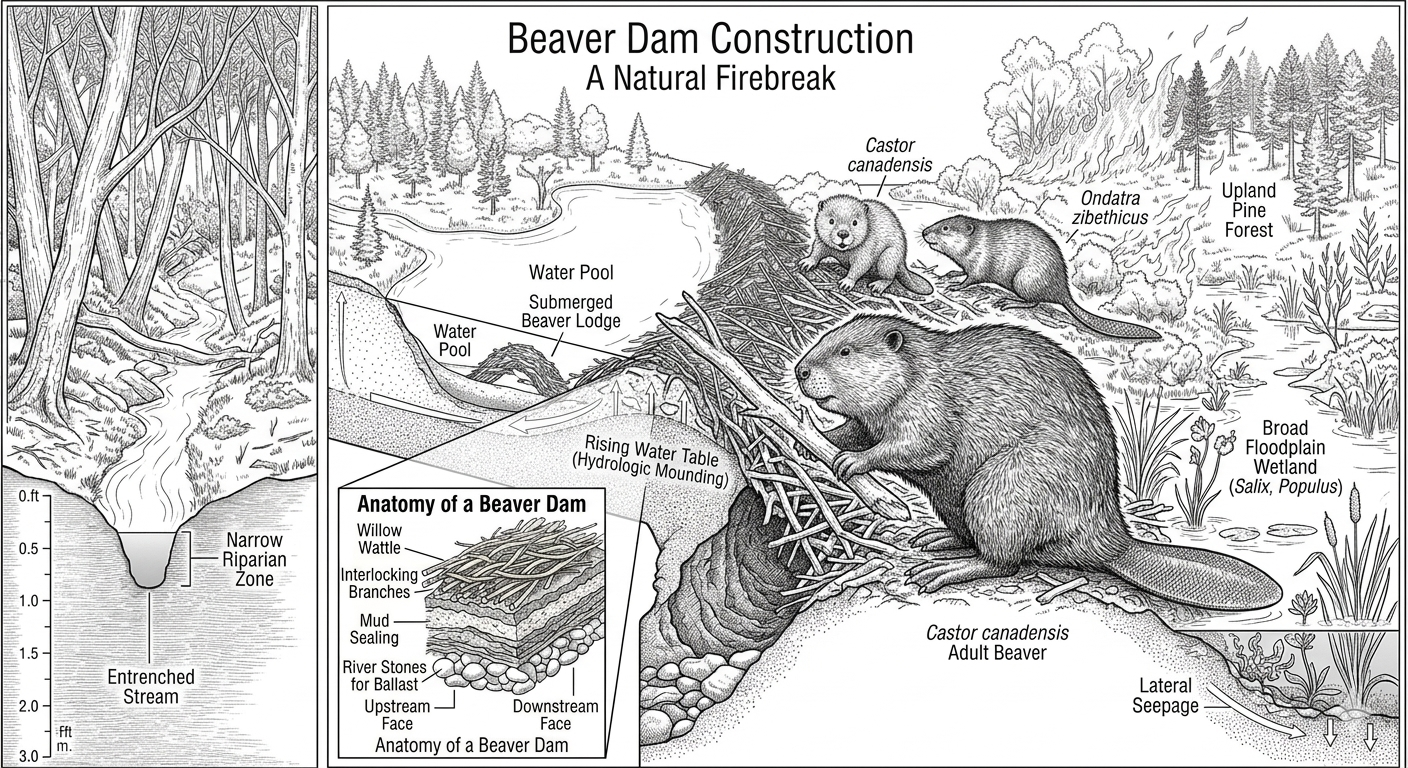
As wildfire seasons grow longer and more destructive across the Pacific Northwest, architects, planners, and land managers are increasingly looking to nature for answers. One of the most compelling solutions isn't a new technology or a zoning code amendment. It's a 40-pound rodent with orange metal teeth and an obsessive need to build.

The beaver — Castor canadensis — may be the most effective wildfire mitigation engineer on the continent. And it's been doing the work for millions of years.

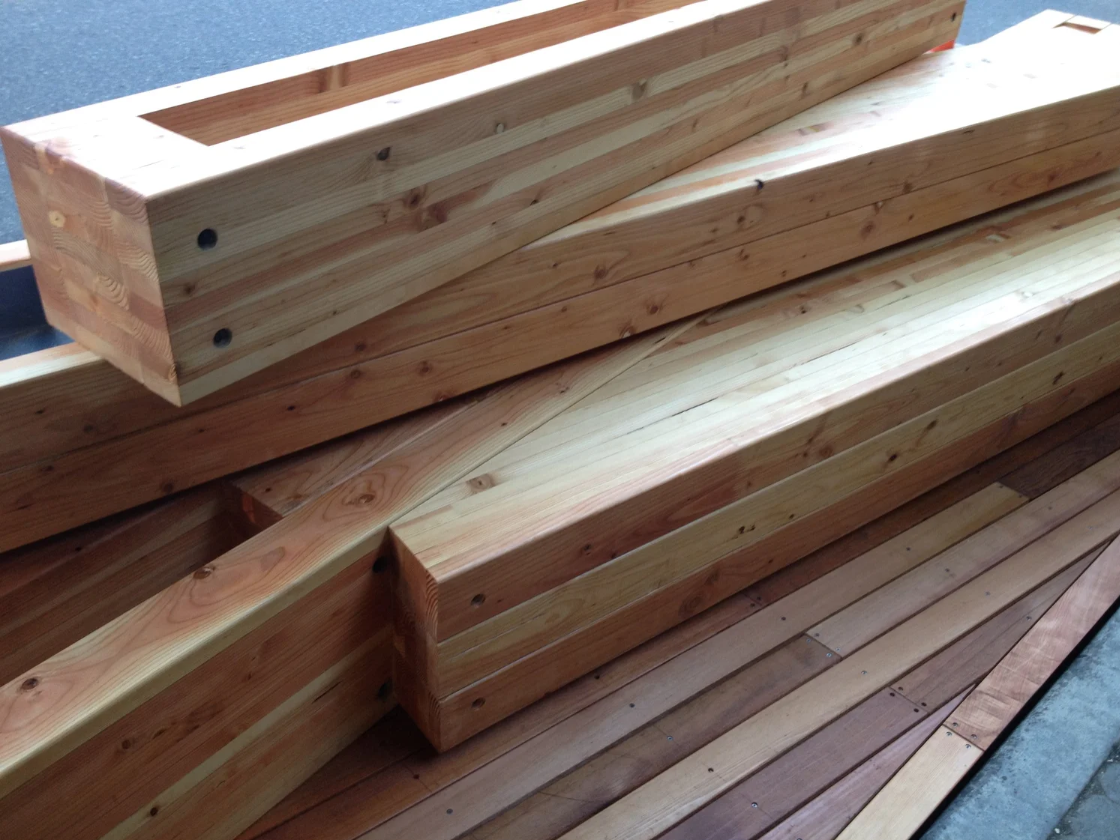
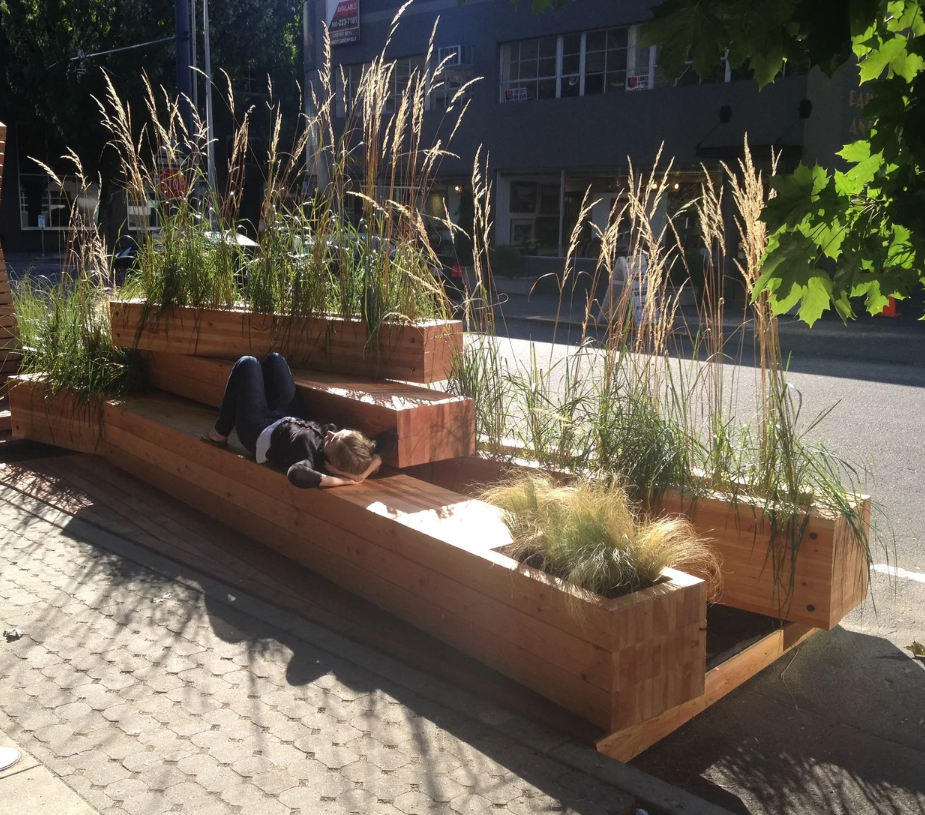
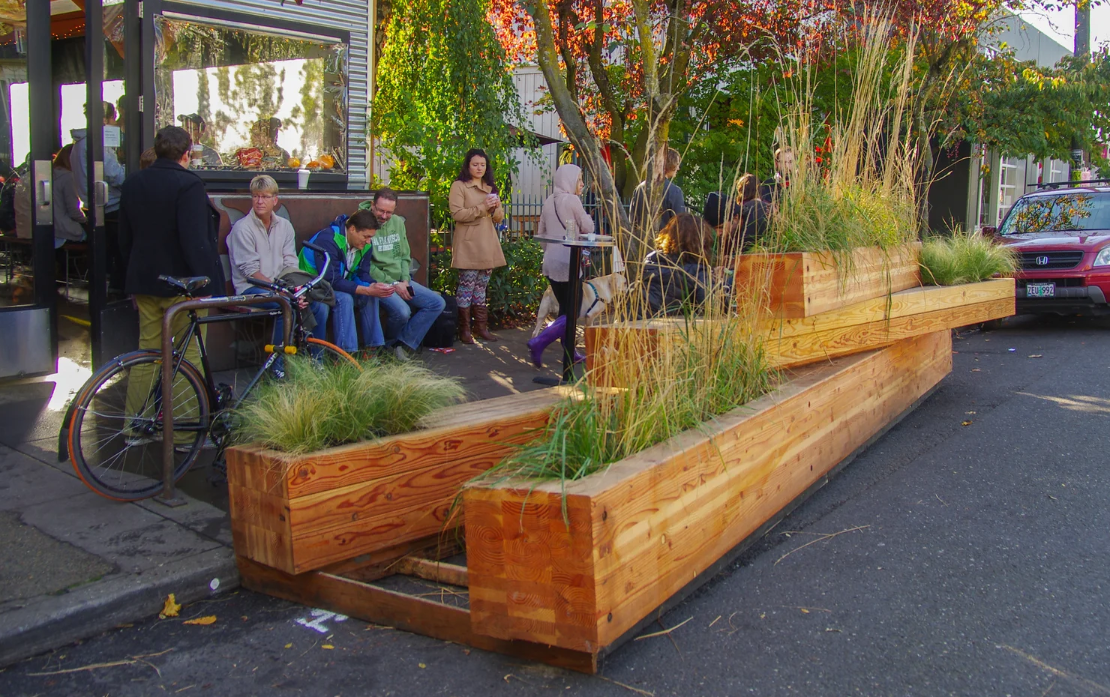
Log Dam Street Seat, Designed and built by Collin Janke, Nick Beyers and Dan Petrescue, and Rob Slattery Construction

The Builder

A recent episode of Radiolab's sister show Terrestrials, titled "The Builders," follows a single beaver family in California and how their activity saved acres of land from burning. The episode features researcher Dr. Emily Fairfax, whose peer-reviewed work has put hard numbers to what many ecologists suspected but couldn't prove: beaver-dammed landscapes are dramatically more fire-resistant than those without.

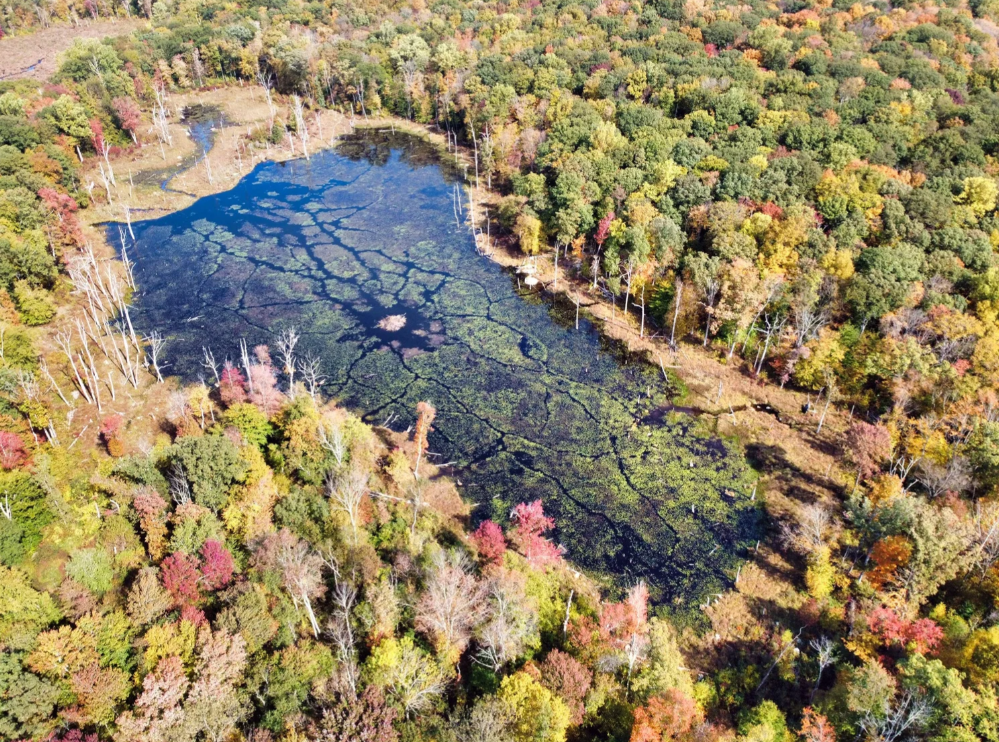
Fairfax found that riparian zones with beaver activity were three times less affected by wildfires compared to similar zones without beaver activity. In short, places with beavers stayed green.

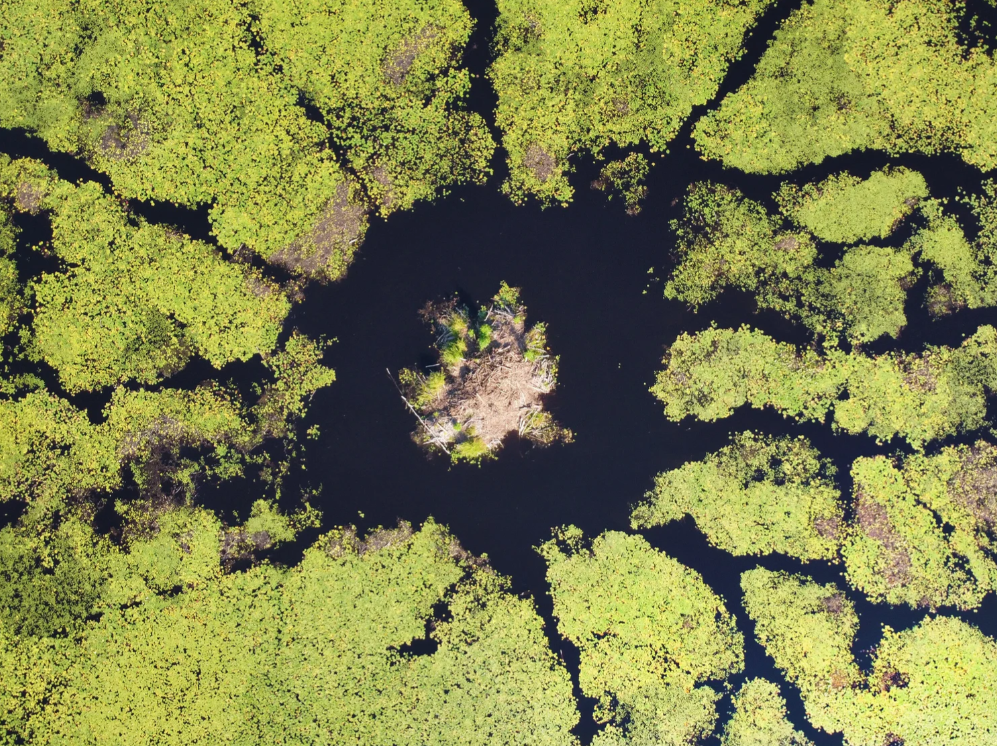
The mechanism is elegant. Beavers build dams, dig channels, and change small streams into broad wetland areas, keeping plants green and lush even during periods of drought. When a fire ignites, the green vegetation near the beaver ponds is far more difficult to burn than dry vegetation elsewhere, and the fire takes the path of least resistance. As Fairfax puts it, it's the same reason you don't start a campfire with wet sticks.

These saturated corridors don't just resist flame — they become what researchers call "emerald refuges": lifeboats for a broad menagerie of amphibians, reptiles, birds, and small mammals that hunker down in these beaver-built sanctuaries while fire races through surrounding terrain.

A History of Removal — and Return

Between 60 and 400 million beavers once filled river valleys across much of the United States, but by the early 1900s, the fur trade had nearly eradicated the species. Today there are an estimated 15 million beavers nationwide. Their loss didn't just affect wildlife — it dried out the landscape, made streams run faster and hotter, and removed the natural water-storage infrastructure that watersheds across the West depended on.

The Terrestrials episode traces this history through a beaver named José, who returned to the Bronx River after a 200-year absence — not by accident, but because a community decided to clean up the river and let it recover. As author and "beaver believer" Ben Goldfarb puts it: "They'll store water for us. They'll capture pollution, they'll help us fight wildfires, they'll create habitat for all of the fish we like to eat and the birds we like to watch. They do all of this stuff for us, if we let them."

Learning from the Lodge

What does this mean for how we build and plan in the Pacific Northwest?

The beaver's approach to its own survival is a masterclass in what designers call multi-solving — building something that serves your immediate needs while regenerating the ecosystem around you. A beaver doesn't separate its "home" from its "landscape strategy." The dam is both shelter and watershed management. The pond is both refrigerator and fire insurance.

Building with wood, storing carbon

The beaver's relationship with wood goes beyond engineering — it's a closed-loop material economy. Beavers fell trees, use them structurally, and when the lodge eventually breaks down, that material returns to the forest system. There's a lesson here for how we think about building materials in the Pacific Northwest.

Wood is the only major structural building material that stores carbon rather than emitting it. When a Douglas fir or western red cedar is harvested and built into a home, the carbon that tree absorbed over decades of growth is locked into the structure for the life of the building — and potentially beyond, if the material is salvaged and reused. By contrast, producing a ton of concrete releases roughly 800 kilograms of CO₂. Steel is similarly carbon-intensive. In a region defined by its working forests — where Oregon and Washington together produce more softwood lumber than any other area in the country — choosing wood as a primary structural and finish material is both an ecological and an economic act of place.

At Janke Architecture, we design with wood as a first principle. From heavy timber framing to cross-laminated timber (CLT) panels to carefully detailed wood interiors, we treat the material as what it is: a renewable, carbon-storing, regionally abundant resource that connects a building to the landscape it sits in. The beaver understood this long before we did. It doesn't import steel or pour concrete. It builds with what the watershed provides — and in doing so, makes the watershed more resilient for everything that depends on it.

We can draw direct lessons for how we think about development at the wildland-urban interface here in Oregon:

Embrace low-tech water retention. Beaver-inspired strategies — sometimes called Beaver Dam Analogues (BDAs) — are already being used in stream restoration projects across the West. Even in places without beavers, humans are building low-tech imitation dams as part of restoration efforts, and often beavers will then be relocated or arrive on their own. At the site and watershed scale, slowing water down — through bioswales, retention ponds, and restored riparian buffers — reduces fire risk and increases drought resilience simultaneously.

Protect and restore riparian corridors. In siting new development near waterways, the instinct is often to engineer the waterway to accommodate the building. The beaver inverts this: build around the water, not over it. Preserved stream corridors aren't just environmental amenity — they're fire breaks.

Design for ecological function, not just aesthetic. Emily Fairfax notes that beavers "don't pull permits or submit design plans" — and yet their chaotic, relentless building creates some of the most climate-resilient landscapes on the continent. The question for architects and site planners isn't just "what does this look like?" but "what does this do for the land around it?"

Support beaver reintroduction. Oregon has active beaver populations and a growing interest in using them as land management partners. Employing smarter, more humane policies — using nonlethal flood-prevention devices and relocating problem individuals rather than killing them — could heal our relationships with beavers and with wildfire alike.

The Mantra

The Terrestrials episode ends with a challenge: be more beaver. Build things that mend rather than harm the land around you. Store water. Create habitat. Slow things down.

That's not a bad aspiration for an architecture practice, either. The best buildings we can imagine for the Pacific Northwest aren't fortresses against a burning landscape — they're participants in a resilient one.

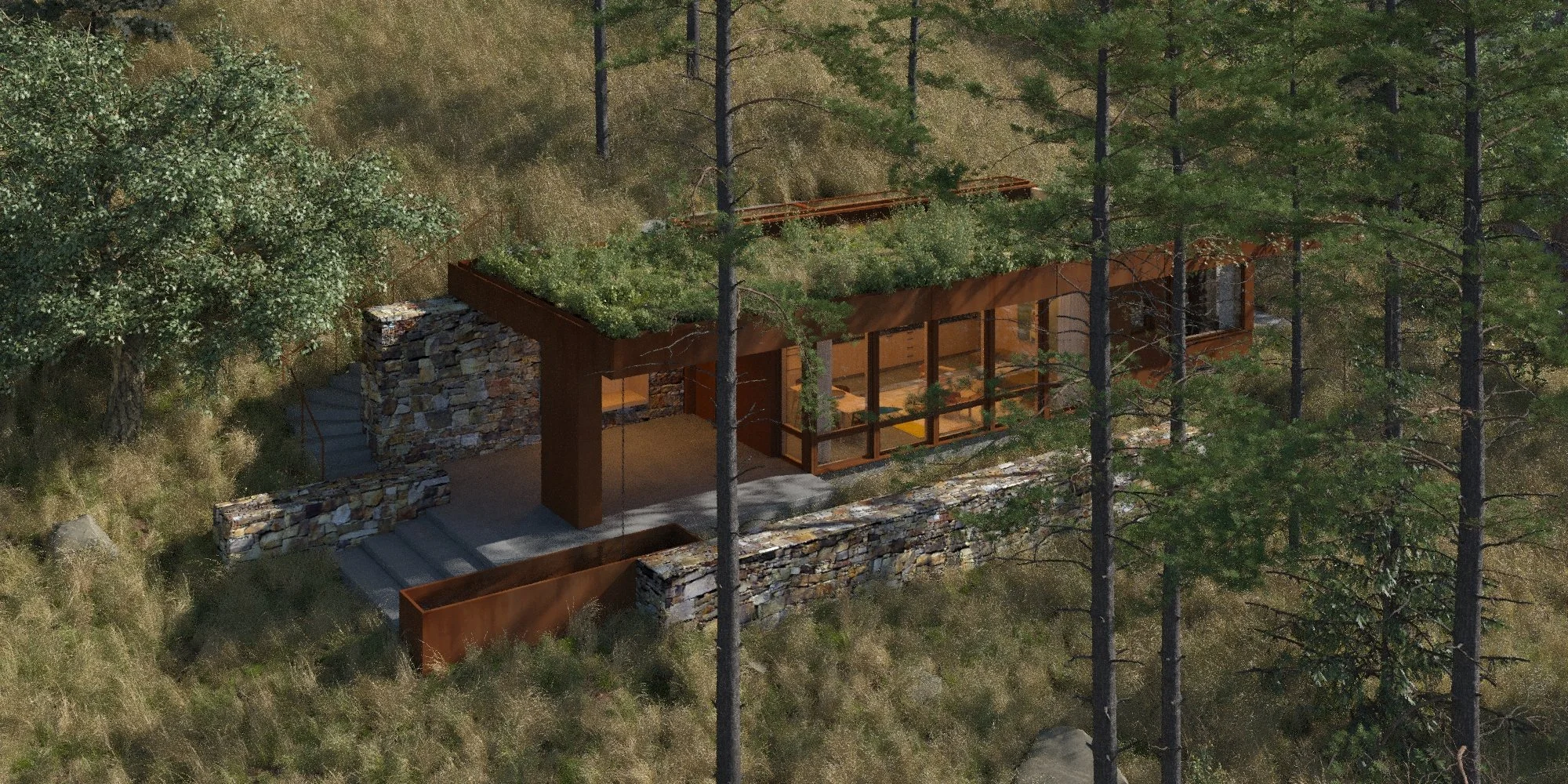
Bring the beaver principle to the roof. The same logic that makes beaver wetlands fire-resistant — keep vegetation saturated, make ignition difficult — applies directly to buildings. Extensive green roofs can function as ember-resistant surfaces that disrupt fire propagation, effectively extending defensible space principles to the roof level. The key is plant selection: sedums and other succulents are naturally flame-resistant and won't contribute to the spread of fire, while grasses can propagate flame spread under drought conditions. The City of Portland has recognized this distinction, and the industry standard ANSI/SPRI VF-1 now acknowledges that data supports the classification of succulent-based systems as Class A fire resistance. A well-designed sedum roof doesn't just reduce stormwater runoff, moderate building temperatures, and extend membrane life — in fire-prone conditions, it behaves like a patch of beaver-tended riverbank: too wet and low-fuel to catch.

Green Roof Design for the Maya Way Guest House in Mosier by Janke Architecture

Inspired by the beaver? At Janke Architecture, we design homes and buildings that work with the Pacific Northwest landscape — not against it. If you're thinking about building or renovating with wildfire resilience in mind, we'd love to talk. Reach out at collin@jankearchitecture.com or visit our contact page to start the conversation.
 

Further listening: "The Builders: How Beavers Mend Our Planet" — Radiolab / Terrestrials (radiolab.org). Further reading: Ben Goldfarb, "Eager: The Surprising, Secret Life of Beavers and Why They Matter."

Check out more photos of beaver dams and lodges at beavermatters.org.

Questions for your Architect

Questions for Your Architect: So Glad You Asked

Hiring an architect is one of the most significant decisions you'll make in a building project. The questions below are ones we hear often — and a few we think every prospective client should ask. We hope our answers give you a clear sense of who we are and how we work.

What kind of projects do you work on?

Our core focus is bespoke custom homes, ADUs (accessory dwelling units), and interior renovations — particularly condo and kitchen work. Our broader experience spans historic preservation, libraries, commercial tenant improvements, and industrial facilities. If a project is thoughtful and well-intentioned, we're interested.

Why should we trust you with our project?

Trust is built, not assumed. It usually starts with an appreciation of our work — a shared sensibility about what good design looks and feels like. From there, we earn your trust by asking the right questions, being honest about budget and scope, and delivering on our commitments. We hope that kernel of confidence, once established, grows into a genuine partnership.

Why should we work with you?

Honestly? We're skilled at asking the questions other people skip.

The most valuable thing an architect can do is identify the responsible questions, the overlooked questions, and the ones that get brushed aside in the excitement of a new project. Is your scope aligned with your budget? Are your timeline expectations realistic? Are we collaborating with a builder early enough to catch cost issues before they're baked into the design?

If these questions aren't being asked, projects go sideways — often expensively. We ask them early and keep asking them throughout.

If you're not sure where to start, our Pre-Design phase is specifically structured to help you set reasonable expectations. We explore your program needs, site conditions, financial parameters, and anticipated budget before a single design decision is made.

Do we share a common ethic for building?

This one matters to us. If you're looking to build a beautiful, durable home with materials that are healthy to live in for generations, then yes — we share a common ethic. We believe the least sustainable building is the one that gets torn down because nobody loves it.

We're drawn to right-sized, sustainable homes with quality finishes that respond thoughtfully to their site and to the way you actually live. In our view, sustainability and sensitivity to place aren't constraints on good design — they're what allow the more visible and expressive qualities of a home to really shine.

What is the architect's role in the project team?

We lead design direction and coordinate the full team — structural and mechanical engineers, builders, and trade partners — from initial brief through construction. We think of it as marshaling the project: facilitating collaboration, curating ideas, and keeping everything aligned with your design goals, budget, and schedule.

We're strong believers in integrated project delivery, where builders and key trades are engaged during design rather than after. The benefit is real: you get better ideas, earlier cost feedback, and fewer surprises in the field.

This is different from a design-build model, where the builder holds the single contract with the owner. That approach has its uses, but in our experience, builder-led projects don't consistently produce the best design outcomes. If you're seeking to hire an architect directly, you're already on the right path.

Where do you work?

Our home and studio is in Portland, Oregon — on the east side of the Willamette River between Laurelhurst and Mt. Tabor Park. Most of our projects are in Portland, though we're doing more work in the Columbia River Gorge and across the river in Washington. We're a licensed architecture firm in both Oregon and Washington, and we genuinely love getting out to job sites — some of our best design work happens in direct response to the place and the problem at hand.

What services do you provide?

We are a full-service architecture firm. That means we take projects from initial concept through schematic design, design development, interior design, technical documentation, permitting, and construction administration.
Here's how we think about the phases:

  • Pre-Design — We ask the foundational questions. What do you need, what does your site allow, and what is your budget actually capable of delivering?

  • Schematic Design — We explore multiple design directions and develop the concept that best fits your goals.

  • Design Development — The design is refined in detail, coordinated with engineers, and prepared for permitting and pricing.

  • Construction Documents — The full technical package your builder needs to build the project.

  • Construction Administration — We stay engaged through the build, answering questions, reviewing submittals, and making sure the design intent is being realized.

The framework above is standard across the profession and supported by the AIA. We follow it because it works — but we put particular emphasis on a thorough Pre-Design and a genuinely exploratory Schematic Design phase, because that's where the best projects are won or lost.

What are your fees?

For a custom home, our fees typically range from 8% to 15% of construction cost, depending on a few factors:

  • Project complexity — Challenging sites, existing building conditions, or regulatory hurdles all require more design effort.

  • Project scope — Smaller projects and renovations carry a higher percentage because there's less efficiency of scale than on a large new build.

  • Level of customization — Bespoke homes require more correspondence, more meetings, and more care. The fee reflects that.

We typically bill hourly and use the percentage-of-construction-cost figure as a planning benchmark — a way to set reasonable expectations at the outset. Fees are structured by phase, and we'll always be upfront about what's included and what might constitute an additional service.

What makes a great custom home client?

We've worked with a lot of wonderful clients, and the ones who get the most out of the process tend to share a few qualities:

A clear vision. You don't need to have all the answers, but knowing what you value and being able to communicate it makes everything better.

Flexibility. Custom projects involve discovery. The best clients are open to new ideas and willing to evolve their thinking as the design develops.

A collaborative spirit. We do our best work when we're genuinely working with our clients — not just presenting to them. The more you engage, the better the outcome.

Realistic expectations. Understanding the relationship between budget, scope, and time is essential. We'll help you calibrate, but clients who come in with an honest view of those constraints have much smoother projects.

Reliability. Timely decisions and responsive communication keep a project moving. Delays in design can compound into delays in construction, and ultimately cost more.

Mutual respect. We bring a lot of experience, care, and craft to every project. We appreciate clients who recognize the value of that — and we'll return that respect in full.

Ready to start a conversation? We'd love to hear about your project. Reach out through our contact page or email us at collin@jankearchitecture.com.


The City of Possibility- More then Just a Model Exhibit

Experiencing the City of Possibility Model Exhibit: A Vision for Future Urban Living

Emerging from COVID a time where for some, remote work and the promise of technology have challenged  the relevance of urban life  - this exhibit the City of Possibility , is an immersive showcase exploring bold new ideas for urban living through physical architecture models. Curated by journalist Randy Gragg and architect Will Smith of Drawings Studio, the exhibit extends the community dialogue sparked by the Green Loop competition ( We learned, don't call it a bike path). The event brought together architects, planners, and visionaries committed to rethinking the built environment in ways that prioritize sustainability, equity, resilience and our connection to the city. 

The Architecture Model as a Vehicle for Dialogue

The foundation for the exhibit begins with the Big Wooden Portland Model, originally created in the 1970s, a time when downtown Portland struggled and was revived. The Model was created to initiate community dialogue about what the city could be. This historical model served as inspiration for the creation of the new models exhibited in the JK Gill Building, demonstrating how contemporary architects and students are building upon past visions to reimagine Portland’s urban future.

The exhibit is split into two parts: The Old Portland models are displayed in the Expensify bank lobby, showcasing historical urban visions and past planning efforts. Meanwhile, the new models—crafted by practicing architects and students—are exhibited in the JK Gill Building, presenting fresh perspectives and contemporary proposals for the city's future. This dual-location approach allows visitors to engage with both the historical context and emerging ideas in urban design.

Ideas and Threads Running Through Our Favorite Contemporary Models

  • Evolution of Timber Design – The history of designing with wood in Portland has evolved into the use of mass timber, known as CLT (Cross-Laminated Timber), which is featured prominently in sustainable urban development. A prime example is the new Portland Airport expansion by ZGF Architects, which showcases innovative mass timber  roof construction, emphasizing sustainability and regional material sourcing.

  • Resilient & Adaptive Design – The models emphasized climate-responsive architecture, highlighting flood-resilient districts, shaded public spaces, and natural cooling strategies. A notable example is the model by Drawings Studio's Will Smith, which functions as a structure for hydrological repair, demonstrating how design can actively contribute to water management and ecological restoration.
  • Gentle Density– Colab's Vermont 10 model stood out as a great example of Gentle Density. Designed as a cluster of housing oriented around an alley spine an almost European solution to "humane infill development". While Hacker Architecture's Ellen Brown building on Division with it's contemporary take on an eroded ziggurat reimagines urban living by blending the intimacy of single-family homes with the vibrancy of multifamily living by offering age in place living while remaining connected to their neighbors. 
  • Ecological Integration – Architect Tim Cooke's thesis project re-envisions the eastside connection to the Willamette River by extending a more organic "beach" structure into the river breaking up the hard concrete/walled edge. While Hacker Architects Landform architecture brings inspiration from landscape forms to reduce the mass and scale of architecture to a more humane architecture deferent to the landscape. Living roofs, rewilded corridors, and circular water systems illustrated how cities can become regenerative rather than extractive.

  • Modular & Flexible Housing – Quirky tiny homes - in the best way -designed by Rand Pinson of Pine Bureau, inspired by European pop-up retail stands offer a  model for micro live-work structures for adaptable living spaces that respond to shifting social and economic needs, allowing organic growth for transitional housing. 

A Cicada event for Architects and Designers

At a time when the digital world is taking on increasing importance and attention in our lives, the physical models—mostly handmade in the exhibit—were a reminder of the value that our physical, tactile, haptic  world brings. They not only enrich the design process through a slower more meditated, often rough, improvisational construction, but also foster meaningful dialogue as evidence by the strong turnout to the exhibit. 

What stood out was the interactive nature of the model exhibit combined with the Next Horizon presentations at the Art Museum's Mark Building. Visitors were encouraged to engage with the models, offer feedback, and contribute their own ideas followed by Panel discussions with urbanists and community advocates that provided further depth on major projects in the city of Portland that will remake entire neighborhoods, including the Albina Vision project, Postal Blocks,  and putting Old Town back to work as a design manufacturing hub for footwear and connecting it all the Green Loop and new Burnside Bridge. 

For those passionate about the future of cities, City of Possibility is an inspiring and refreshing reflection on the state of  Portland at a admittedly struggling time for the image of the city. If you get a chance to visit, it’s well worth the time to immerse yourself the minature vision of what Portland was and will be. 

Mosier Project is a Wrap!

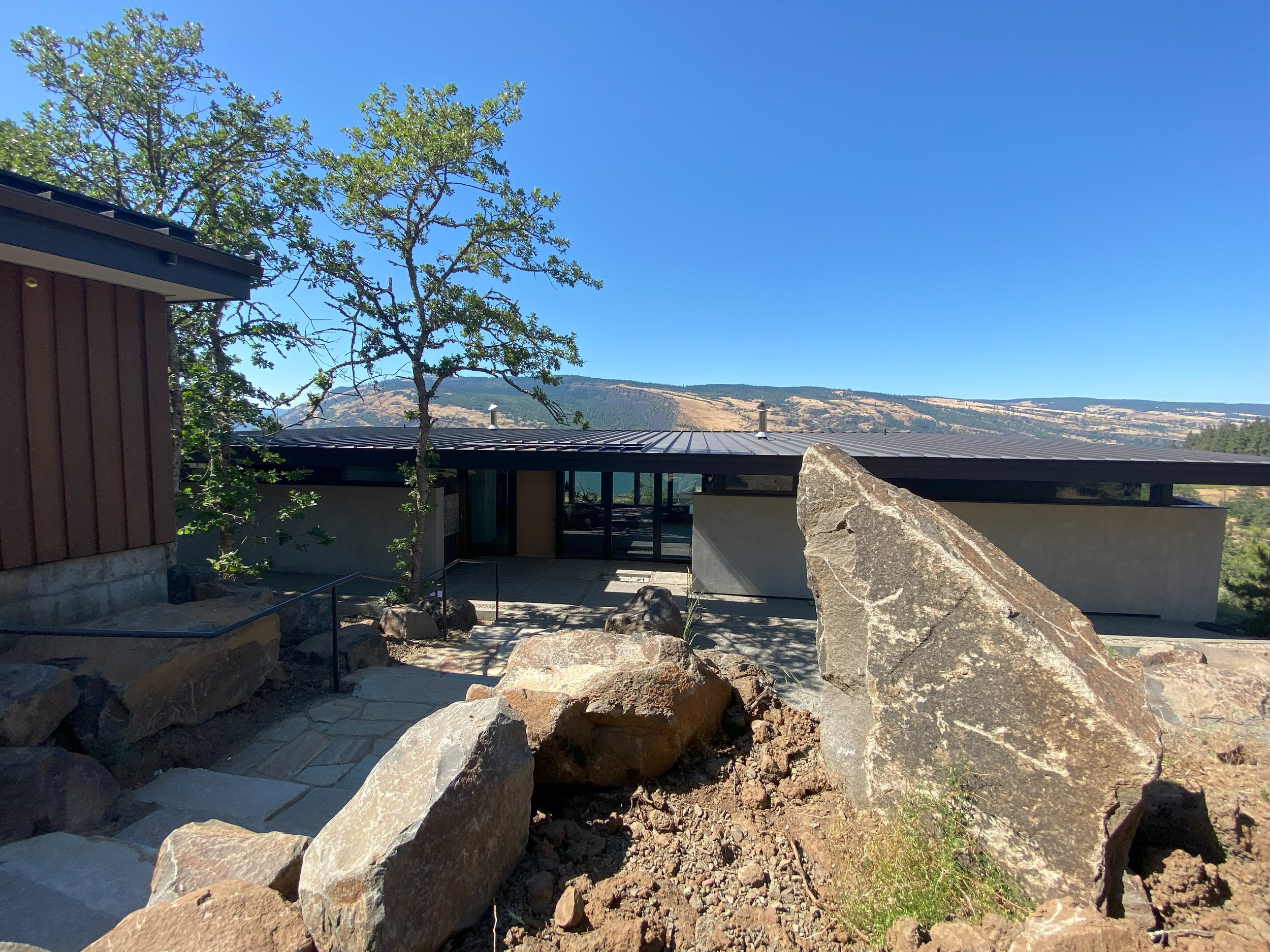
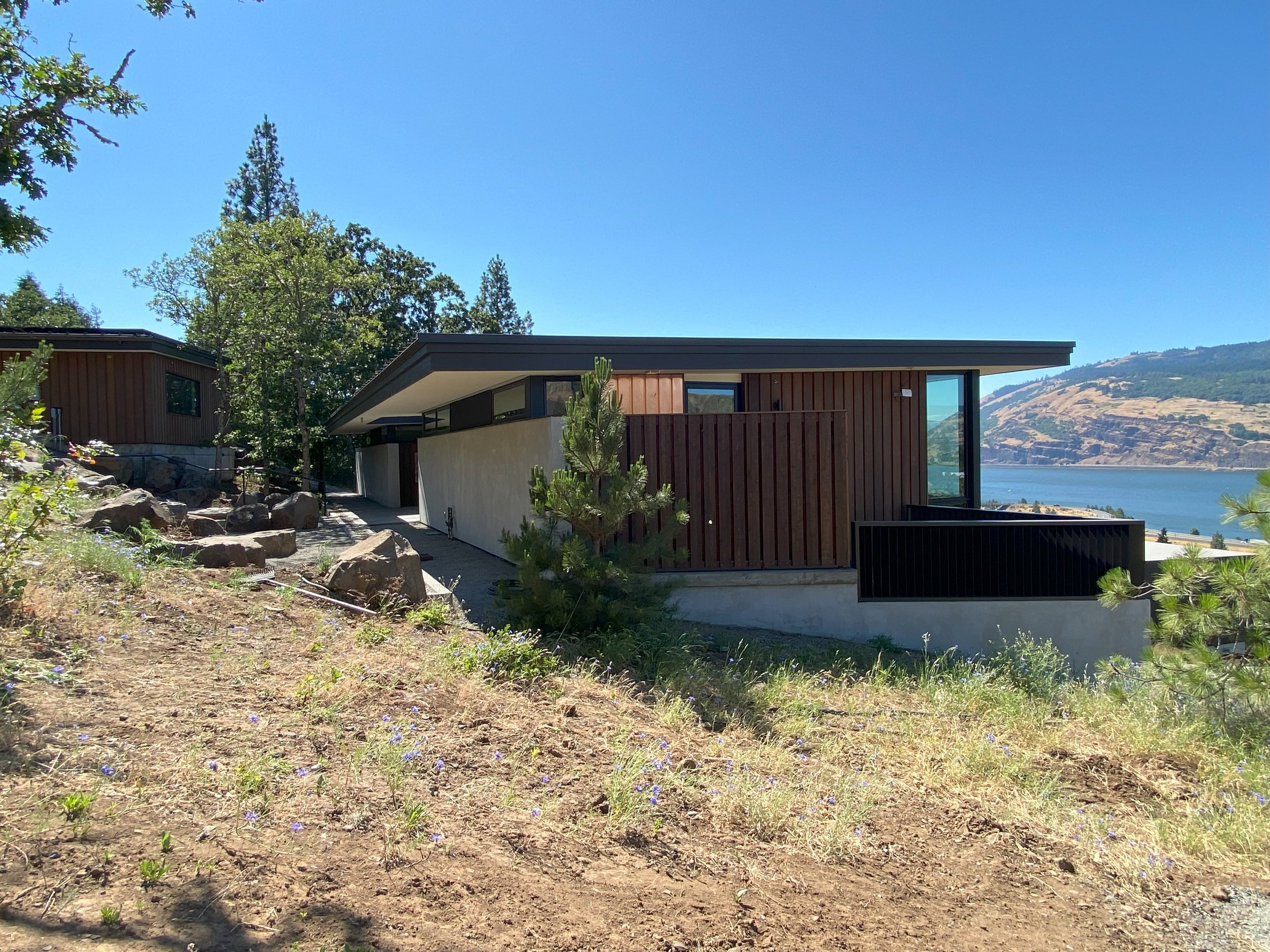
We are over the moon to share these photos from our last site visit to the Mosier Ledge House. Still some loose ends but we couldn’t wait to share some of the exterior photos of the home. It’s a magic moment when the protective film is removed from the windows!

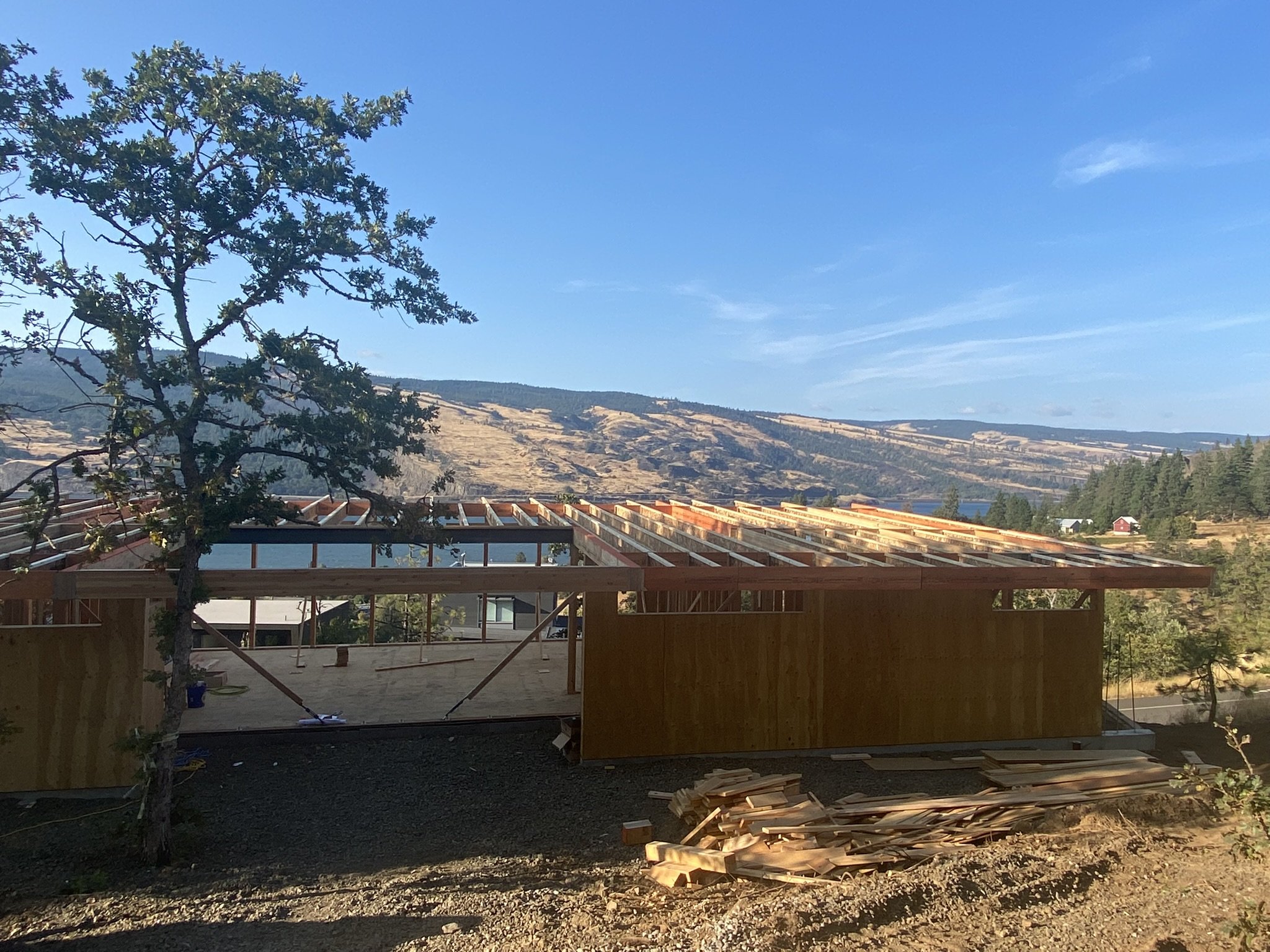
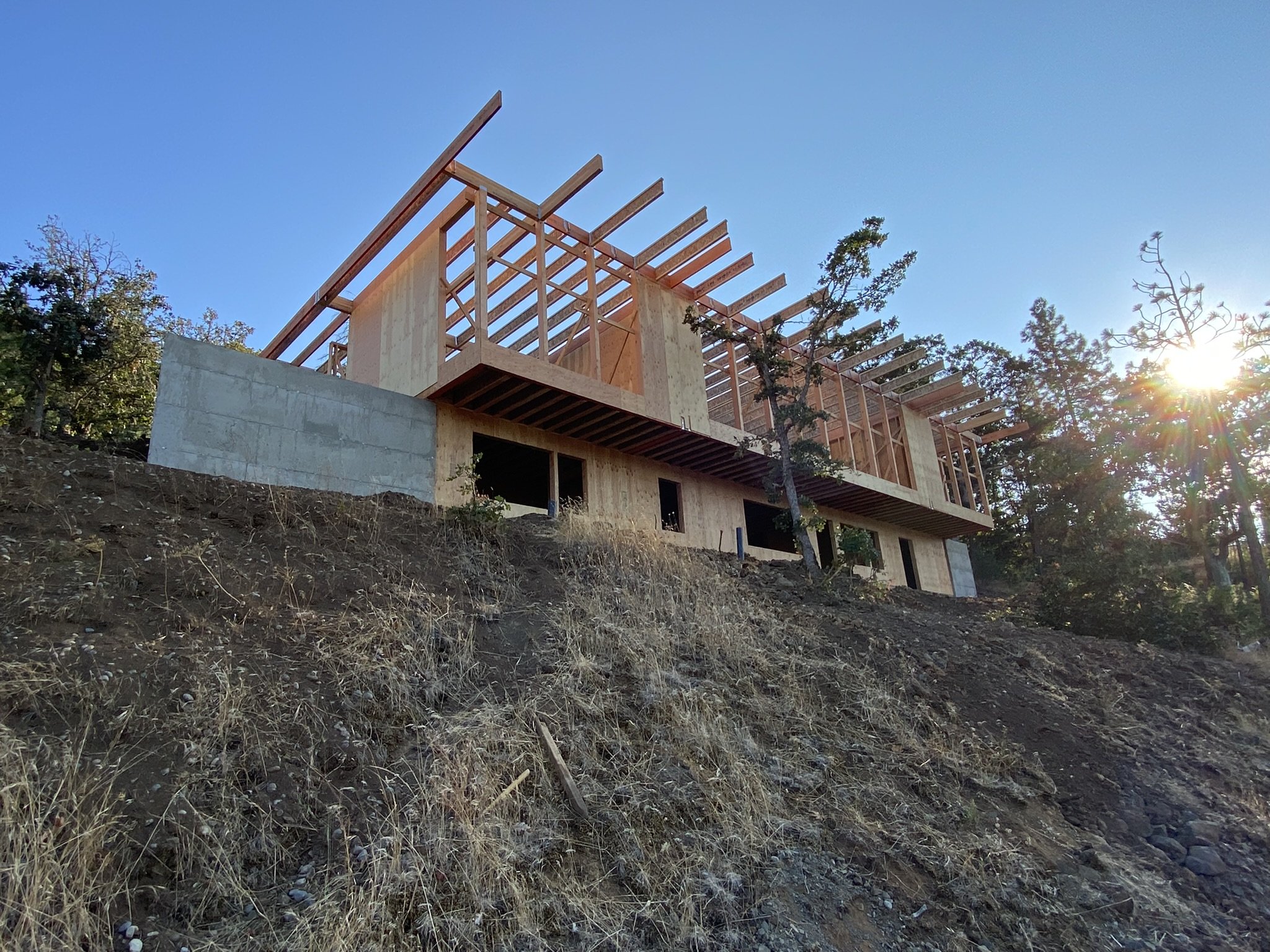
Mosier: Framing is Up !

There is nothing quite like watching wood framing rise for a new custom home. This is the moment where all the teams collaborative planning comes together over the course of a week or two. And we are happy to report that the framing on this build is dialed! We planned this house on a 4’-0” window module to leverage efficiency and align with typical roof framing that is 24” on center. While this home is a light wood framed structure in many ways it was designed like a timber frame building. The order and rhythm helps create a sense of everything being in it’s right place. This is most evident at the entry courtyard where the window posts that are also structural align with the large windows across this building that opens up to the view of the gorge.


keep it long and low

Arrival to the home descends from above, so it was important to design a beautiful roof that didn’t obstruct the view so we kept the roof long and low.

We love a roof like a good sailors hat

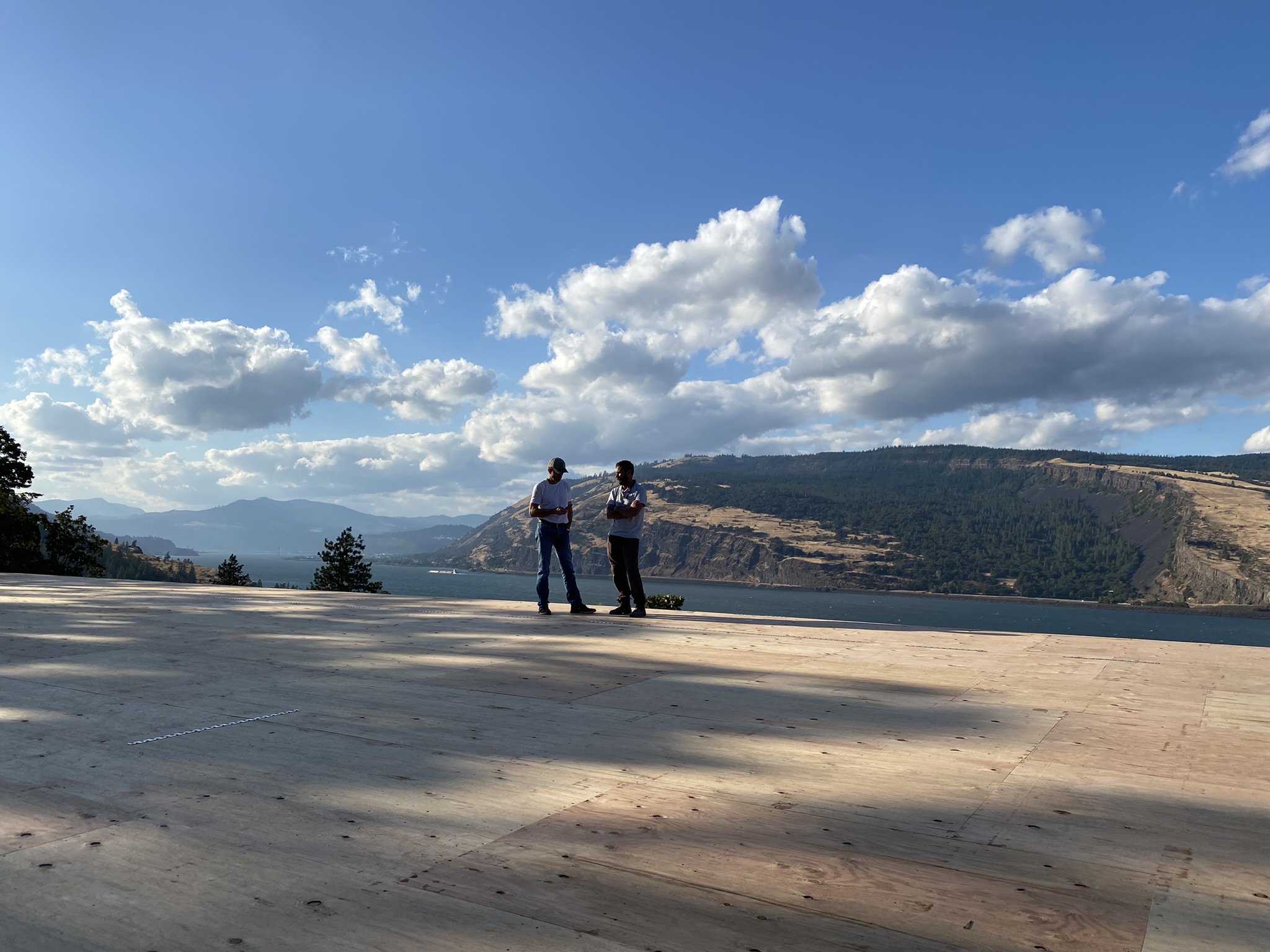
Don and Ben taking a moment to reflect on the new roof! Gotta love this pandemic plywood.


Keeping the beat

The plan for this house is a long rectangular bar punctuated by a south facing courtyard - here you can see the gravel back fill that creates a nice level spot to enjoy the view on a sunny day in the shade. Check out how the roof framing tracks to the structural posts!

a South facing Courtyard

Super excited to see this courtyard with dappled light and the roof extend across with future oculus to the sky. We situated the courtyard on the south side to buffer the outdoor space from the windy Gorge, which was a bit counter intuitive with the view to the north. Even so this view from the courtyard is going to be amazing through the floor to ceiling windows at both sides of the home.

Deep eaves for a long life

Our eaves on the south side of the build extend 5’-0” to shade for summer sun at the courtyard, with a roof oculus to allow winter light into the living room. There will also be a ground gutter for stormwater, so when heavy rain falls there will be a healthy distance for rain to over splash and not wet the building. We love a minimal roof eave detail sans gutter!

Anticline & Syncline

Our design for the dramatic cantilevered wood framed first floor over concrete basement is informed by the geologic shifting of the surrounding basalt fault lines that created Anticlines (ridges) and Synclines (valleys). These ridges and valleys look like broad shelfs sweeping across the landscape can be seen prominently in the Columbia River Gorge.

WEAVING AT THE ROOF FRAMING

In short the framing on this roof is not unlike a weave in wood where some beams extend long and other beams stop short. To achieve the double cantilever at the roof with flush framing (all in one plane) we worked with our engineer Mike Munzing to back span the window header over our corner post that reaches out to a structural rake. That rake continues out to support a structural fascia that is picked up by a back spanned beam that extends off the wall of the bedroom to pick up the fascia. The engineering on this house is like a duck - calm and ordered on the exterior but working hard with more then meets the eye behind below the water line.